By Law Office of Aili Obandja
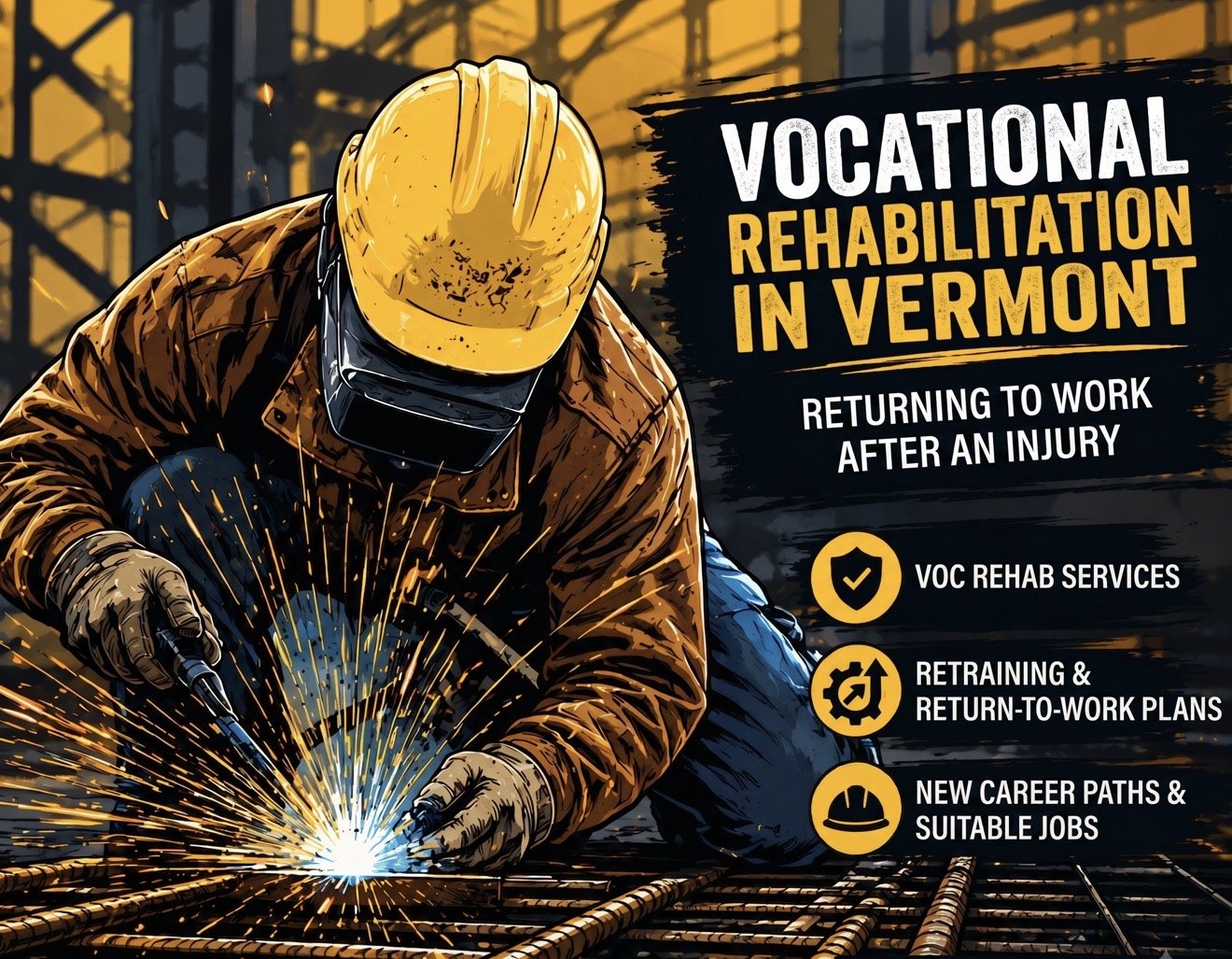
If you cannot return to your old job after a work injury in Vermont, vocational rehabilitation may become an important part of your workers’ compensation claim.
Many injured workers focus first on wage-loss benefits and medical treatment. But when an injury changes your long-term ability to do the work you did before, return-to-work planning, job modification, retraining, and other vocational services may matter too.
This blog explains when vocational rehabilitation may be an option in a Vermont workers’ compensation claim, how it may help, and why the 90-day mark matters.
1. When Vocational Rehabilitation May Be an Option
When a work injury prevents you from returning to suitable employment, vocational rehabilitation may become important. Under Vermont’s vocational rehabilitation rules, these services may be available when the injury keeps you from returning to work that matches your prior training or experience. Vermont Department of Labor, Vocational Rehabilitation Rules
The rules also contemplate return-to-work discussions involving light duty, job modifications, and other practical ways to restore employability.
2. How Vocational Rehabilitation May Help
In practical terms, vocational rehabilitation may help if:
you cannot return to your old job because of permanent or long-term restrictions;
you can work, but not in the same kind of work you did before;
you need help identifying suitable jobs within your restrictions;
you need retraining or return-to-work planning; or
the insurer claims you should be working, but no realistic suitable work has been identified.
Depending on the facts of the claim, vocational rehabilitation may involve evaluating your work history, reviewing restrictions, identifying realistic job options, discussing modified work with the employer, or developing a plan to return you to suitable employment.
3. The 90-Day Period
Vermont workers’ compensation rules also require written verification that vocational rehabilitation screening or services were offered after 90 days of total disability.
That does not mean every injured worker automatically receives the same services in the same way. It means that if you have been out of work for a substantial period, vocational rehabilitation should be actively considered rather than overlooked.
Bottom Line
If a work injury keeps you from returning to suitable employment, vocational rehabilitation may be an important part of your Vermont workers’ compensation claim. It may help identify realistic work options, support return-to-work planning, and address the gap between your restrictions and your prior job.
If you have questions about vocational rehabilitation after a work injury in Vermont, the Law Office of Aili Obandja can review the facts of your claim and help you understand your options.
Disclaimer
This blog is for general informational purposes only and is not legal advice. Reading it does not create an attorney-client relationship. Every workers’ compensation claim depends on its medical evidence, work restrictions, job history, and procedural facts. If you need advice about your particular situation, you should consult an attorney.
